Re-sealing That ProtectsYour Paving ForYears To Come
Sealer correctly applied to clean, dry paving — deeper colour, weed-resistant joints, oil and stain resistance, and a finish that genuinely pays for itself.
Local
Based in Havant
Insured
Public liability cover
Written
Fixed quotes in writing
Soft wash
Surface-correct method
Sealing the right way — clean first, dry properly, correct product, correct dilution.
Sealing failures are almost always application failures. Sealer applied to damp or dirty paving, the wrong product for the surface, or too thick a coat — all common, all avoidable, all costly to fix.
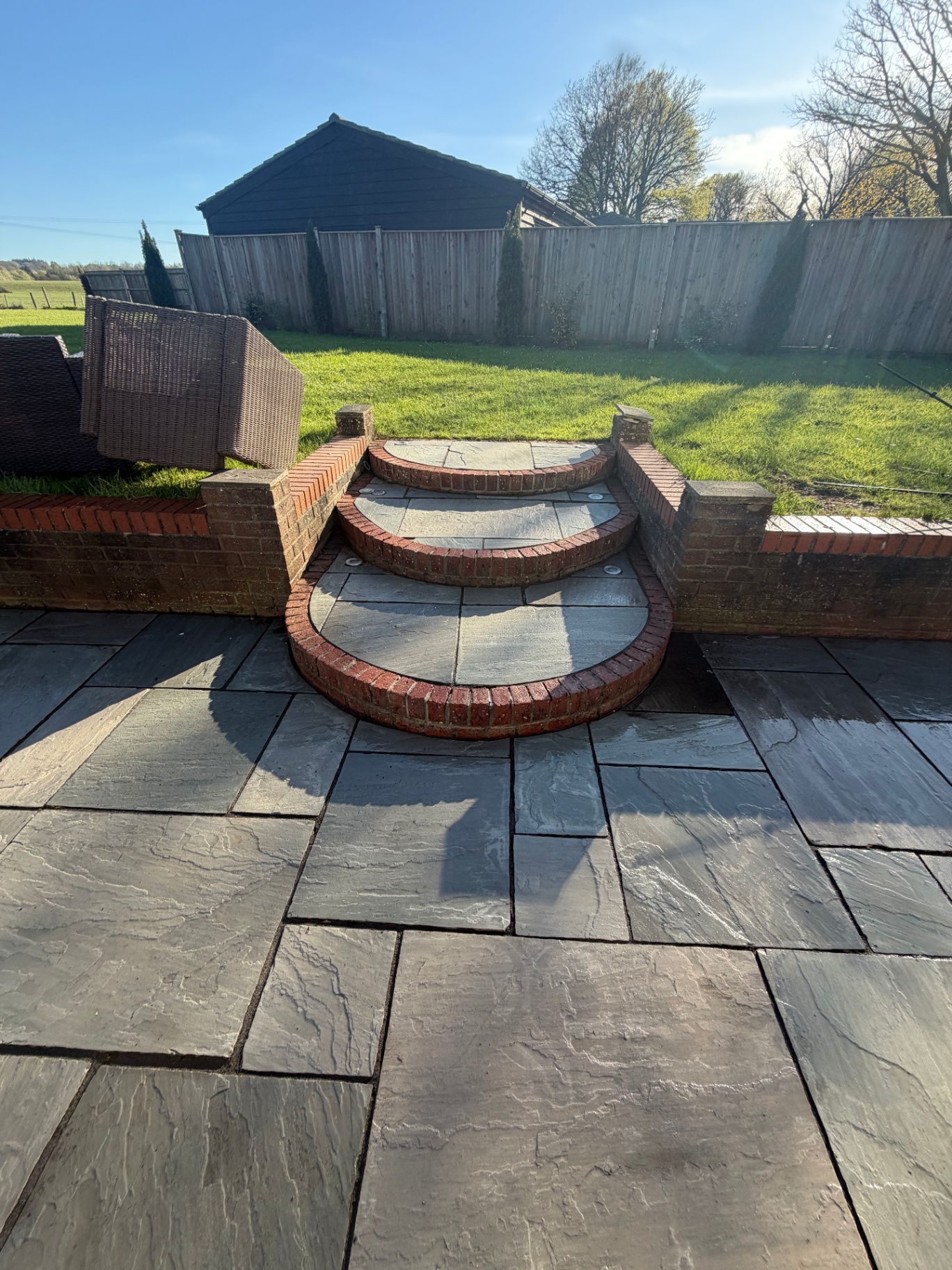
We seal driveways, patios and walls with a product chosen for the specific paving type, the climate exposure, and the look you want (natural, satin or wet-look).
Every sealing job starts with a proper clean and full drying time. Sealing damp paving traps moisture, causes hazing and can ruin the finish permanently. We never apply sealer the same day as cleaning unless conditions are genuinely right.
Done properly, sealing locks joint sand in place, deepens block colour, repels oil and tyre marks, dramatically slows weed and algae growth, and makes the next clean significantly easier. It's not for every driveway, but where it makes sense, it's outstanding value.
- Impregnating (penetrating) sealers
- Acrylic surface sealers (wet-look or satin)
- Colour-enhancing sealers
- Joint-stabilising sealers
- Polyurethane sealers for high-traffic areas
- Honest advice — we'll tell you if you don't need it
What goes wrong when paving isn't sealed.
Unsealed paving has a working life. Sealed paving has a much longer one. The difference shows up in stains, weeds and the slow loss of colour that owners stop noticing until they see a neighbour's freshly sealed drive.
Stains become permanent
Oil, fuel, rust and tyre marks soak into porous paving and become very hard to remove. A sealed surface repels almost all of them.
Joint sand keeps washing away
Heavy rain steadily strips unsealed joint sand. A joint-stabilising sealer locks the sand in place for years.
Colour fades to grey
UV exposure fades unsealed concrete and clay pavers steadily. Colour-enhancing sealers protect the original tone and even revive it.
A clear, methodical system — built around your time and your property.
Inspection
We assess the surface, age, material and condition on site or from your photos — and quote in writing.
Preparation
Plants, drains and fragile fixtures are covered. Loose debris is cleared before cleaning begins.
Treatment
The correct chemistry and pressure for the surface — biocides, detergents or pure cleaning where appropriate.
Verification
A controlled rinse, inspection in natural light, and a walk-around with you to check every metre.
Completion
Site left spotless. Aftercare advice and a clear written invoice.
The benefits you'll actually notice — and the ones that pay for themselves.
Deeper, richer colour
Colour-enhancing sealers bring out the original tones in the paver. Faded blocks look new again.
Stain repellent
Oil, wine, leaves and tyre marks sit on top of the sealer rather than penetrating the paving.
Joints stay locked
Joint-stabilising sealers bond the kiln-dried sand into a single matrix — no more washout, no more weed gaps.
Dramatically fewer weeds
Properly sealed joints starve weed seedlings of the bare-soil contact they need to germinate.
Easier ongoing cleaning
Sealed paving cleans with a low-pressure rinse — no need for heavy machinery on every clean.
Adds real years to paving
Surface protection slows freeze-thaw damage, reduces wear, and demonstrably extends paving life.
Which sealer for which surface — the honest version.
Sealer choice matters enormously. The wrong product looks great for six months then fails. The right one performs for 5–10 years. Here's how we choose.
Impregnating (penetrating) sealers
Sink into the paver pore structure rather than sitting on top. Leave the natural matte appearance unchanged. Excellent for natural stone — sandstone, limestone, granite — where any glossy finish would look wrong. Typically last 4–7 years before refreshing.
Acrylic surface sealers
Sit on the surface and provide a satin or wet-look finish. The standard choice for concrete block paving and imprinted concrete. Re-coat every 3–5 years. Available in different sheen levels — we always discuss the finish before applying.
Joint-stabilising sealers
Specifically formulated to bond loose kiln-dried sand into a stable matrix. The single best upgrade for any block-paved driveway — practically eliminates joint washout and dramatically reduces weed growth. Often combined with a colour-enhancing top coat.
Polyurethane and high-spec sealers
For commercial driveways, hotel forecourts and high-traffic areas. Tougher, more expensive, longer-lasting. Quoted specifically per project.
Every job is quoted in writing before any work begins. Send your postcode and a photo of the surface and we'll come back with a fixed price.
Often booked together
Book your re-sealing.
Get your free estimate today.
Send your postcode and a photo of the job. We'll reply with a clear, written price — no obligation, no hard sell.
- Public liability insurance up to £5 million
- Written quote by reply
Request your free estimate
Free, fixed-price written quote by reply.